Choosing between RK3566 and RK3588 starts with the work your device must perform. A touchscreen terminal running one application has different needs from a system combining independent displays, camera processing, and local AI.
For OEMs, the useful question is whether additional processing capability solves a measurable requirement. Board configuration, software support, cooling, and peripheral integration can matter as much as the processor name.
Evaluate RK3566 first for straightforward single-display interfaces and conventional signage workloads. Evaluate RK3588 when demanding applications, independent multi-display operation, or heavier AI processing justify a higher performance tier. Confirm the complete board and firmware configuration before choosing either platform.

A performance tier is a processor’s practical capability to handle a defined combination of computing, graphics, multimedia, and peripheral workloads. Core count alone cannot establish how an embedded device will behave.Rockchip’s official RK3566 brief datasheet describes a quad-core Cortex-A55 CPU and Mali-G52-2EE GPU. This is a useful starting point for evaluating control interfaces, information terminals, and conventional media playback.The official RK3588 brief datasheet lists four Cortex-A76 cores, four Cortex-A55 cores, and a Mali-G610 MC4 GPU. Its larger computing and graphics resources make it a candidate for more demanding concurrent workloads.
| Comparison | RK3566 | RK3588 | OEM Selection Implication |
|---|---|---|---|
| CPU | 4 × Cortex-A55 | 4 × Cortex-A76 + 4 × Cortex-A55 | Test application responsiveness and concurrent tasks. |
| GPU | Mali-G52-2EE | Mali-G610 MC4 | Evaluate the actual interface, composition, and graphics workload. |
| NPU rating | 1 TOPS at INT8 | 6 TOPS at INT8 | Measure the intended model; theoretical TOPS do not predict end-to-end speed. |
| Memory interface | 32-bit; DDR and LPDDR options listed in the datasheet | 64-bit; LPDDR4, LPDDR4X, LPDDR5 | Verify installed RAM, memory use, and workload bandwidth requirements. |
| Video decoding | 4K-class decoding | Up to 8K-class decoding, codec-dependent | Validate the exact codec, profile, frame rate, and software playback path. |
| Display architecture | Single display engine; same-source dual-display capability documented | Multiple display output paths | Confirm independent content, connector combinations, and supported timings. |
These are processor-level distinctions. The board manufacturer selects memory, routes interfaces, and supplies the firmware that makes those functions usable. Eight CPU cores do not automatically make every application twice as fast as a four-core system.
Workload matching means selecting hardware against the device’s actual applications, display arrangement, and processing targets. A realistic test should combine the tasks expected to run together.
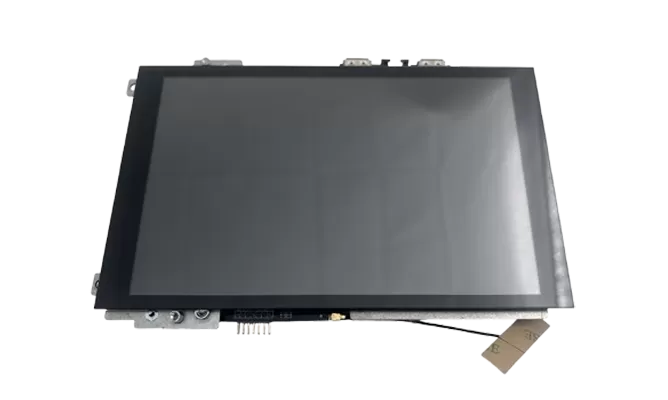
A single-screen information terminal, menu display, or straightforward touch interface may not benefit enough from a larger processor to justify changing the design. Begin with the application, its content, and its peripheral requirements.SUNCHIP’s RK3566 Android board range includes AD-C05 and AD-C36 models. Compare the selected model’s memory, screen connections, serial ports, and firmware rather than treating every RK3566 board as identical.Run the intended application while downloading content, writing logs, and communicating with peripherals. If performance remains within the project’s acceptance criteria, that configuration has a stronger justification than an upgrade based solely on specifications.
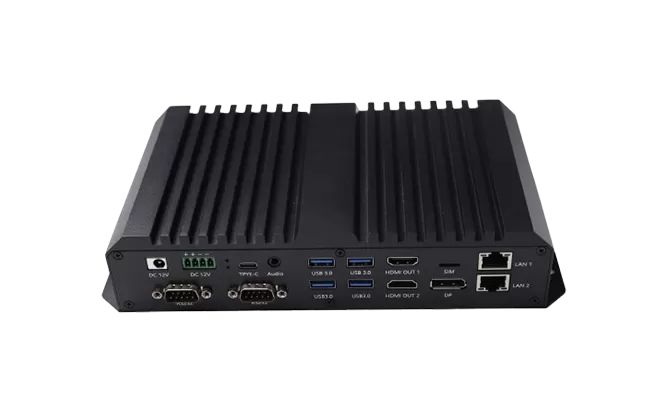
RK3588 becomes more relevant when processing demands overlap: a graphics-heavy interface, camera analysis, background services, or several independent display outputs. Check whether the bottleneck is CPU work, graphics composition, memory use, or software before changing platforms.For such projects, SUNCHIP’s RK3588 Android board offering provides a higher-tier option based on the AD-C58 platform. Request the exact display-output matrix and operating conditions for the proposed configuration.For AI, Rockchip’s official RKNN-Toolkit2 repository lists support for both processor families. Evaluate model conversion, supported operators, accuracy, and runtime compatibility. The difference between 1 TOPS and 6 TOPS is not evidence that an entire vision application will run six times faster.Measure the complete pipeline, including camera capture, preprocessing, inference, and postprocessing. An unsupported operator or a CPU-bound preprocessing step can limit performance even when NPU resources remain available.
Total integration cost includes the board, memory, cooling, power supply, enclosure changes, software adaptation, validation, and ongoing support. A processor price or board quotation captures only part of that cost.Do not assign either platform a universal operating wattage. Consumption varies with the specific board, memory, firmware, peripherals, and workload. Likewise, passive cooling suitability depends on enclosure conditions and sustained operation.Compare both candidates using the same application, content, connected devices, and ambient conditions. Record idle consumption, normal workload consumption, peak behavior, temperature, and responsiveness after the system reaches a stable operating temperature.As an illustrative calculation, a measured average difference of 3 watts in a device operating continuously would equal 26.28 kWh per year: 3 × 24 × 365 ÷ 1,000. This is a calculation example, not a measured RK3566-versus-RK3588 result.Software work also affects the decision. A familiar operating system version does not guarantee compatibility with the same panel, camera, serial equipment, or update process. Ask for the board support package, firmware identifier, recovery procedure, and scope of maintenance.RK3566 may be the economical choice when an established configuration already meets requirements. RK3588 may justify additional spending when validated processing headroom avoids a functional compromise or an otherwise necessary redesign. Obtain comparable quotations and engineering estimates before reaching either conclusion.
Board validation is the process of proving that a specific hardware configuration and software release meet the complete device’s acceptance criteria. It turns a processor comparison into a purchasing decision.Start with a requirement sheet covering the application, display model and timing, independent or mirrored content, camera inputs, peripherals, RAM, storage, network connections, and enclosure conditions. Include expected future functions only when their requirements are sufficiently defined to test.Then compare candidate samples under the same workload. Agree on acceptable startup behavior, interaction latency, playback quality, AI accuracy and throughput where applicable, temperature, and recovery after power interruption. Record board revisions and firmware versions with the results.Test the busiest expected workload as well as normal operation. A device may appear satisfactory during a simple demonstration but slow down during content updates, simultaneous camera activity, or sustained processing.For an existing product, verify mounting, power connections, connector positions, display timing, signal levels, and peripheral drivers. RK3566 and RK3588 boards should not be assumed to be drop-in replacements.Before approving volume supply, retain a reference sample, the agreed configuration, and the acceptance record. Ask how component substitutions or firmware changes will be communicated and revalidated.
The right embedded performance tier is the configuration that meets the device’s requirements with acceptable cost, thermal behavior, and software support. RK3566 is a practical platform to evaluate for simpler display and control workloads; RK3588 warrants evaluation when heavier computing, graphics, AI, or display requirements create a clear need.Use processor specifications to shortlist candidates, then use complete-system testing to make the decision.
Confirm the actual board interfaces and firmware before committing to production.Share your application, display configuration, peripheral list, target operating system, estimated quantity, and development schedule with SUNCHIP through its OEM/ODM engineering services. Request a configuration comparison and sample validation plan for your project.
RK3588 offers a higher performance tier, but the better project choice depends on workload, interfaces, thermal design, software support, and total cost. An RK3566 configuration that passes the required tests may be sufficient.
The processor supports 4K video decoding. Verify the board’s output timing, codec support, content complexity, and playback software with the intended display.
Its official documentation describes a single display engine and same-source dual-display capability. Do not assume two connectors provide independent content; confirm the specific board and firmware arrangement.
No general application-speed multiplier follows from the NPU ratings. Actual results depend on the model, operator support, precision, memory transfers, and processing outside the NPU.
There is no universal board-level answer. Compare measured average consumption and sustained performance using equivalent workloads, peripherals, and environmental conditions.
Do not assume direct compatibility. Check mechanical dimensions, power, connectors, display adaptation, drivers, and application behavior before planning a platform migration.

 EN