Email Us

Rockchip RK3588 Android Boards for 8K Display and Edge AI

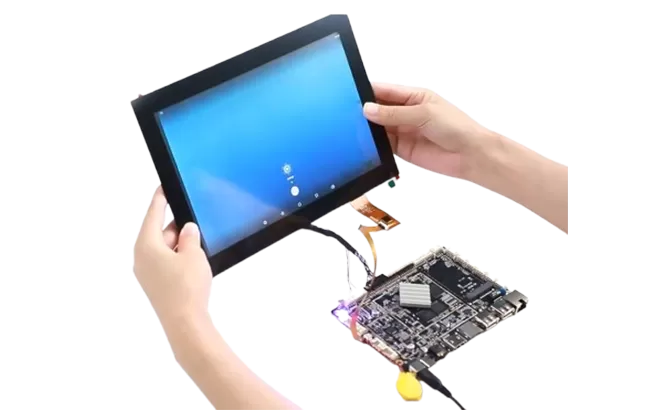
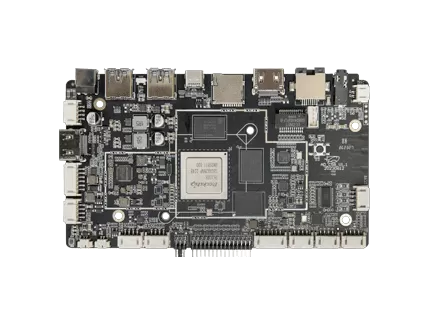
Boasting an advanced octa-core CPU and high-performance NPU, the rockchip RK3588 Android Board delivers exceptional processing power for complex AI tasks and 8K multimedia processing. It supports quad-display output and features comprehensive interfaces including PCIe 3.0 and USB 3.1. Ideal for high-end digital signage, interactive kiosks, and edge computing systems, it offers robust construction and extensive customization options for demanding commercial applications.
Request RK3588 Board Datasheet

Available RK3588 Android Board Model

AD-C58-RK3588
AD-C58-RK3588
Android 12 and above OS,4+32GB/16+256GB, HDMI OUT&IN (Up to 8K@60FPS), LVDS, EDP, MIPI display interface, TF card 128GB.
Know More

Why Our RK3588 Android Board is Your Smartest Choice?

Leading Computing Power of Rockchip RK3588 Board

Featuring an advanced octa-core CPU with four Cortex-A76 and four A55 cores, the RK3588 delivers exceptional processing performance for complex AI algorithms.

Visual Performance of Rockchip RK3588 Board

Supports 8K@60fps video decoding and encoding capabilities, for premium digital signage and large-scale video wall applications.

Multi-Screen Display of Rockchip RK3588 Board

Capable of driving four independent displays simultaneously with flexible output combinations.

AI Acceleration of Rockchip RK3588 Board

Integrated NPU delivers 6 TOPS computing power, enabling real-time audience analytics, behavioral recognition, and intelligent content adaptation for next-generation smart advertising solutions.

Connectivity of Rockchip RK3588 Board

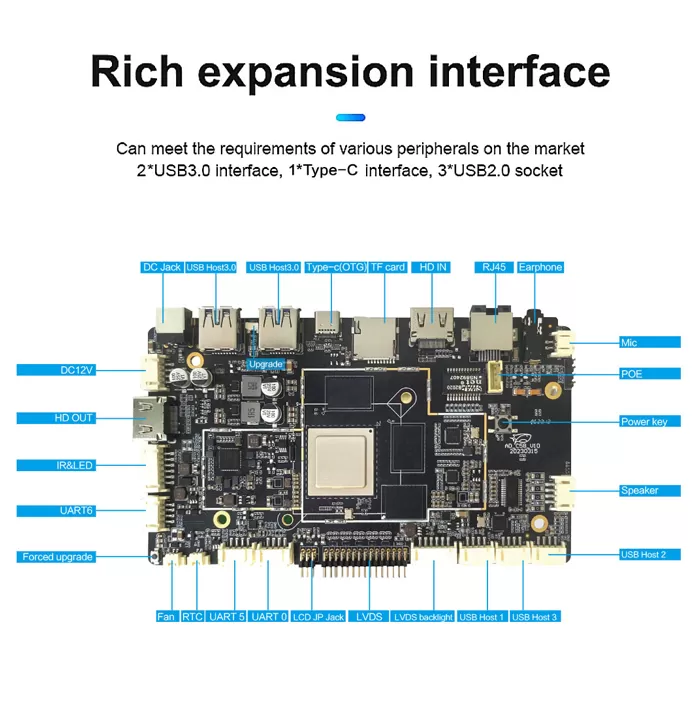
Comprehensive interfaces including PCIe 3.0, USB 3.1, and dual Gigabit Ethernet provide expansion capabilities for high-speed peripherals and network connectivity.

Reliability of Rockchip RK3588 Board

Built with industrial-grade components and advanced thermal management, ensuring stable 24/7 operation in continuous commercial use with robust power design and protection circuits.

Why Our RK3588 Android Board is Your Smartest Choice?

Ideal Applications for the Rockchip RK3588 Board

RK3588 Android Board

With quad-display output capability, this rockchip RK3588 board powers sophisticated video wall installations for control centers, corporate lobbies, and event venues.

RK3588 Android Board

Leveraging its 6 TOPS NPU, our rockchip RK3588 board drives intelligent kiosks with real-time facial recognition, gesture control, and personalized content delivery.

RK3588 Android Board

Supporting 8K video processing, RK3588 board excels in high-end shopping malls and brand flagship stores, serves professional digital signage networks in broadcast studios, stadiums, and live event venues, handling high-resolution content with exceptional clarity and smooth playback.

RK3588 Android Board

Supporting 8K video processing, RK3588 excels in high-end shopping malls and brand flagship stores, serves professional digital signage networks in broadcast studios, stadiums, and live event venues, handling high-resolution content with exceptional clarity and smooth playback.

RK3588 CPU, GPU and NPU Performance

RK3588 combines an octa-core CPU, Mali-G610 graphics and a 6 TOPS NPU to process demanding Android applications, high-resolution multimedia and selected edge AI workloads.

Octa-Core CPU Architecture

The processor combines four Cortex-A76 performance cores with four Cortex-A55 efficiency cores. The Cortex-A76 cores handle demanding workloads such as application processing, complex user interfaces and data analysis. The Cortex-A55 cores can manage background services, network communication and lighter operating system tasks.


This architecture is suitable for:


  • Complex Android applications

  • Multi-window interfaces

  • High-resolution content management

  • Local database processing

  • Peripheral control

  • Background communication services

  • Simultaneous media and application tasks

  • Edge computing terminals


Actual operating frequency and sustained performance depend on the firmware configuration, power supply, cooling design and ambient temperature.


01

Mali-G610 MC4 Graphics

The integrated Mali-G610 MC4 GPU supports advanced Android interfaces, 2D and 3D graphics, multi-layer video composition and high-resolution visual content.

Supported graphics technologies include:

  • OpenGL ES

  • Vulkan

  • OpenCL


The GPU can be used for:

  • Interactive digital signage

  • Animated user interfaces

  • Three-dimensional product demonstrations

  • Dashboard visualization

  • Multi-layer video content

  • Touchscreen applications

  • High-resolution display systems


Application performance should be evaluated using the actual software, display resolution, memory configuration and cooling structure.

02

6 TOPS AI Acceleration

The RK3588 integrates a triple-core NPU delivering up to 6 TOPS of AI computing power. The NPU supports several numerical formats, including INT4, INT8, INT16, FP16 and BF16, providing flexibility for optimized neural network deployment.


Potential edge AI applications include:

Image classification

Object detection

People counting

Gesture detection

Equipment status recognition

Product recognition

Basic visual inspection

Local video analytics

Voice or sensor data processing


The final AI performance depends on:


Model architecture

Input resolution

Quantization

Number of input streams

Required inference speed

Supported software framework

Model conversion quality

Application optimization


Projects requiring model conversion, RKNN deployment or NPU performance testing should be evaluated separately with SUNCHIP’s engineering team.

Learn more about RK3588 applications in edge computing.


03

RK3588 Video Decoding and Encoding

RK3588 multimedia processing supports 8K video decoding, high-resolution video encoding and advanced commercial media applications.

Up to 8K 60fps Video Decoding

RK3588 supports hardware decoding for video formats including:

  • H.265

  • H.264

  • AV1

  • VP9

  • AVS2

The platform can decode supported video content at up to 8K 60fps.

Actual playback performance also depends on:

  • Video codec

  • Bitrate

  • Container format

  • Storage speed

  • Software player

  • Display output

  • Memory configuration

  • Thermal conditions

For demanding 8K projects, SUNCHIP recommends testing the customer’s actual media files before approving the final hardware and firmware configuration.

Up to 8K 30fps Video Encoding

RK3588 supports H.264 and H.265 video encoding at up to 8K 30fps.

Video encoding is relevant to projects involving:

  • Camera recording

  • HDMI video capture

  • Video conferencing

  • Content processing

  • Local video storage

  • Remote video transmission

  • Intelligent visual analysis

Encoding performance should not be confused with the processor’s higher 8K 60fps decoding capability.

HDMI Video Input

The AD-C58 provides an HDMI input for projects that need to receive an external video source.

Potential applications include:

  • Video capture terminals

  • Presentation recording

  • External camera systems

  • Live information displays

  • Video processing equipment

  • Monitoring interfaces

The maximum verified HDMI input resolution, frame rate, HDCP compatibility and input latency should be confirmed according to the selected AD-C58 hardware version and project requirements.

HDMI Video Output

The board provides high-resolution HDMI output for compatible commercial displays.

Output resolution depends on:

  • Board hardware version

  • Android firmware

  • Display device

  • HDMI cable

  • Content format

  • Simultaneous display configuration

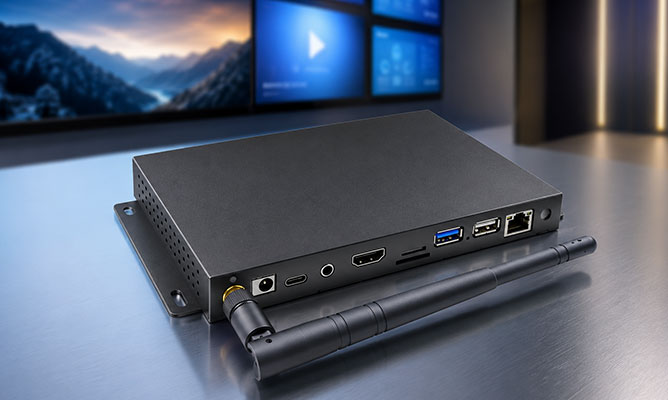
For a complete media player with an enclosure, power supply and ready-to-deploy interfaces, review SUNCHIP’s 8K media player box.


RK3588 Connectivity and Peripheral Integration

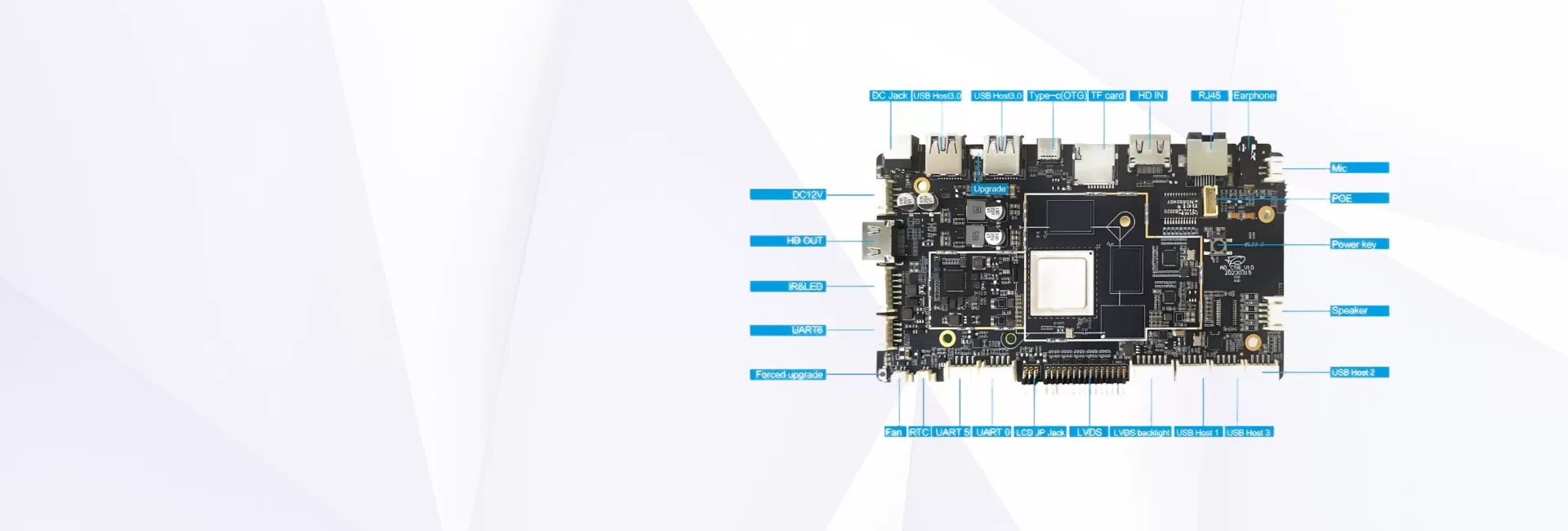
The AD-C58 provides high-speed network, USB, Type-C and serial interfaces for complex embedded equipment.

Network Connectivity

The standard board configuration provides:

  • Gigabit Ethernet

  • Wi-Fi 6

  • Bluetooth 5.0

These interfaces can support:

  • Remote content updates

  • Cloud communication

  • Local network control

  • Wireless peripheral connection

  • Device management

  • Data synchronization

  • Streaming and media delivery

Network performance depends on the router, antenna design, software, distance and operating environment.

01

USB and Type-C Expansion

The board provides USB 2.0, USB 3.0 and Type-C interfaces for compatible peripherals such as:

  • Cameras

  • Storage devices

  • Barcode scanners

  • Printers

  • Card readers

  • Touchscreens

  • Keyboards and mice

  • Audio devices

  • Selected 4G or 5G modules

  • External controllers

Peripheral compatibility should be confirmed using the exact model, driver, communication protocol and power requirement.

02

Serial Peripheral Integration

The serial ports can connect supported equipment such as:

  • NFC modules

  • RFID readers

  • Receipt printers

  • Card readers

  • Sensor controllers

  • Lighting controllers

  • External microcontrollers

  • Industrial communication modules

RS232, RS485 and other interface requirements should be confirmed before final board selection.

03

Camera Integration

The RK3588 platform provides advanced image processing resources, while the actual camera quantity and resolution available on the AD-C58 depend on the board interfaces and firmware.

Customers should provide:

  • Camera model

  • Interface type

  • Resolution

  • Frame rate

  • Number of cameras

  • Required image processing

  • Required AI model

  • Required recording or streaming function

SUNCHIP can then evaluate camera, ISP, memory bandwidth and NPU requirements.

04

RK3588 Multi-Screen Display Integration

RK3588 multi-screen integration uses HDMI, eDP, LVDS and MIPI display interfaces to support advanced commercial display systems.

The AD-C58 provides several display interface options, but the number of simultaneous screens, maximum resolution per screen and independent-content capability depend on the selected output combination and firmware configuration.


Potential display configurations may include:

  • HDMI and eDP

  • HDMI and LVDS

  • HDMI and MIPI

  • eDP and LVDS

  • HDMI, eDP and LVDS

  • Other verified multi-interface combinations


Before confirming a multi-screen project, SUNCHIP engineers evaluate:

  • Number of required displays

  • Resolution of each screen

  • Refresh rate

  • Landscape or portrait orientation

  • Mirrored or independent content

  • Video format on each screen

  • Touchscreen requirements

  • Required Android application behavior

  • Display connector and cable

  • Mechanical enclosure

  • Cooling design

Information Required for Multi-Screen Evaluation

Please provide:

  1. Number of displays

  2. LCD or monitor model

  3. Resolution of each display

  4. Required display interface

  5. Required refresh rate

  6. Mirrored or independent content

  7. Landscape or portrait orientation

  8. Video content format

  9. Touchscreen requirements

  10. Enclosure and cable restrictions


SUNCHIP can then confirm a suitable interface combination and prepare a test configuration.

For more application information, read the guide to using an RK3588 board for 8K digital signage and multi-screen systems.


RK3588 Board Development Process

A structured development process helps identify display, AI, interface and thermal risks before mass production.

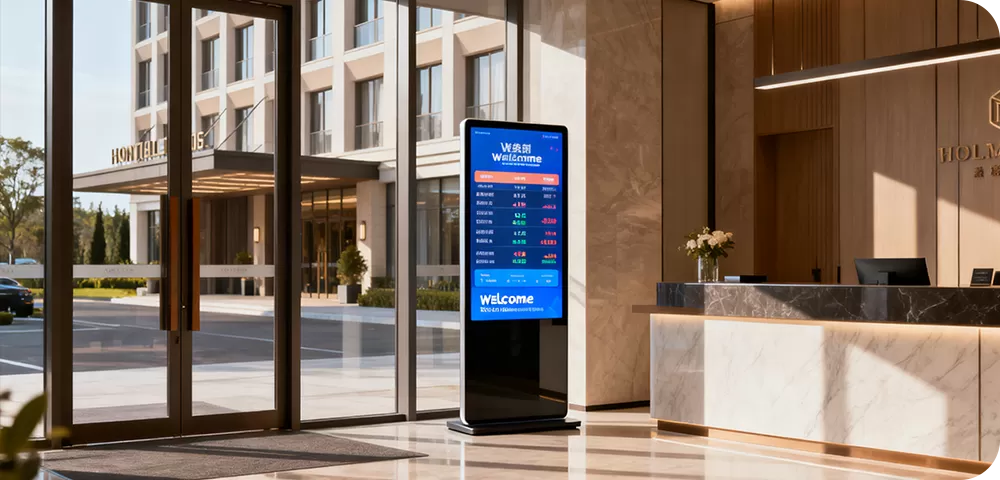
Step 1: Requirement Collection

The customer provides:

  • Product application

  • Display quantity and resolution

  • LCD or monitor datasheets

  • Touchscreen requirements

  • Camera requirements

  • Peripheral device list

  • Android application requirements

  • AI model information

  • Network requirements

  • Enclosure dimensions

  • Estimated order quantity

  • Target production schedule

01

Step 2: Platform Evaluation

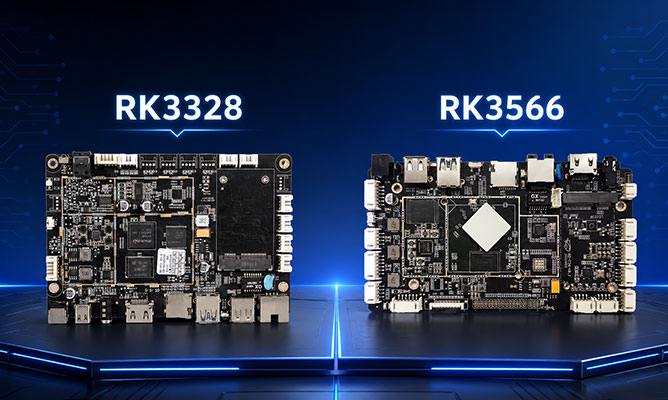
SUNCHIP evaluates whether RK3588 is necessary for the project or whether another Rockchip Android board can meet the requirements at a lower cost.

02

Step 3: Hardware Configuration

The engineering team confirms:

  • Memory

  • Storage

  • Display interfaces

  • Network

  • USB

  • Serial ports

  • Camera input

  • Power supply

  • Cooling

  • Mechanical restrictions

03

Step 4: Firmware Configuration

The required Android version, display driver, touch driver, peripheral support, APK installation and system settings are prepared.

04

Step 5: Sample Development

A sample is prepared using the agreed hardware and firmware configuration.

05

Step 6: Project Testing

Testing may cover:

  • Display output

  • Multi-screen operation

  • 8K video playback

  • HDMI input

  • Touchscreen response

  • Camera input

  • Network connection

  • USB peripherals

  • Serial communication

  • Android application performance

  • AI model inference

  • Thermal behavior

  • Power consumption

06

Step 7: Customer Validation

The customer tests the board inside the actual device and confirms the final configuration.

07

Step 8: Batch Production

After approval, the confirmed hardware and firmware versions are transferred to production with version control and functional inspection requirements.

08
Android Board
Ready to customize? Contact SUNCHIP for your OEM/ODM solution today!
Android Board
We use cookies to offer you a better browsing experience, analyze site traffic and personalize content. Part of the tracking is necessary to ensure SEO effectiveness,
By using this site, you agree to our use of cookies. Visit our cookie policy to learn more.
Reject Accept