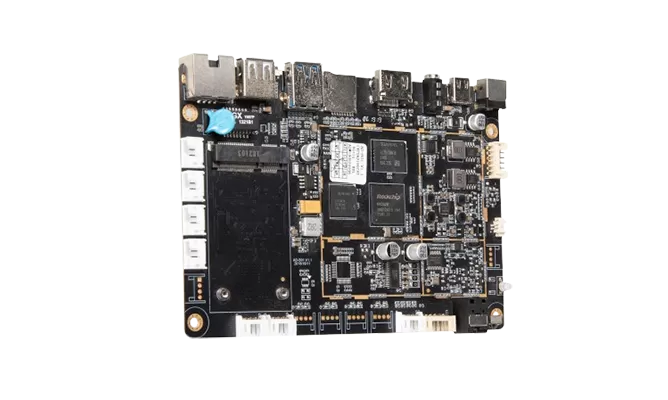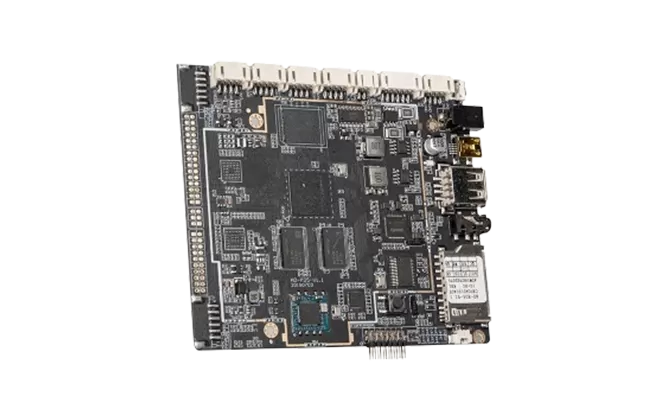
RK3328 vs RK3566 is a practical comparison for buyers choosing an Android board for digital signage, media players, kiosks, smart retail displays, industrial control panels and embedded systems. Both Rockchip platforms can support commercial Android applications, but they target different levels of performance, display flexibility and long-term scalability.
In simple terms, RK3328 is a cost-effective 4K media playback platform, while RK3566 is a newer and more flexible option for projects that need stronger CPU architecture, richer display interfaces, better I/O and light AI capability. Sunchip provides Android Board solutions based on different Rockchip platforms for OEM/ODM display and embedded projects.
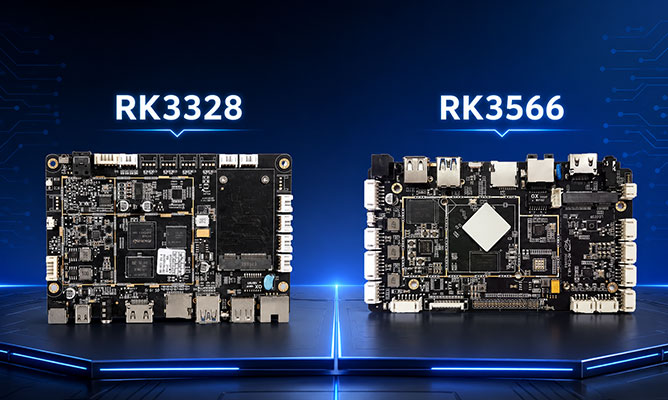
The RK3328 board is a cost-effective Rockchip Android board designed for stable 4K media playback, single-screen digital signage and basic embedded display applications. It is a good fit when the project mainly needs reliable video output, common Android app support and controlled hardware cost.
According to the official Rockchip RK3328 specifications, RK3328 uses a Quad-Core Cortex-A53 CPU, Mali-450MP2 GPU, DDR3/DDR3L/LPDDR3/DDR4 memory support, 4K VP9 and 4K 10-bit H.265/H.264 video decoding up to 60fps, HDMI 2.0a output for 4K@60Hz and USB 3.0/USB 2.0 connectivity.
For buyers, this means RK3328 is still suitable for price-sensitive commercial media projects. Sunchip’s AD-B01-RK3328 Android Board is positioned for 4K video playback, information displays, single-screen signage and basic kiosks where stable operation matters more than advanced AI or multi-display output.
The RK3566 board is a newer Rockchip Android board built for more flexible display integration, better graphics capability and richer interfaces. It is better suited for interactive kiosks, smart retail terminals, dual-display projects, industrial panels and display systems that need a stronger upgrade path.
The official Rockchip RK3566 brief datasheet lists Cortex-A55 Quad-Core CPU, Mali-G52-2EE GPU, 4K video decoder, 1080p video encoder, 8M ISP, 1T NPU, HDMI, eDP, LVDS, MIPI-DSI, MIPI-CSI, USB 3.0, SATA 3.0 and Gigabit Ethernet support. Compared with RK3328, RK3566 offers a more modern architecture and more interface choices.
Sunchip’s RK3566 Android Board supports digital signage, touch displays, interactive kiosks and smart retail solutions. Its page highlights quad-core Cortex-A55 performance, ARM Mali-G52 GPU, 4K decoding, dual-display support and rich I/O, making it a stronger choice for projects that need more than simple playback.
RK3328 vs RK3566 should be compared by CPU architecture, graphics, video decoding, display interface, connectivity, AI capability and target application. The table below gives a practical buyer comparison.
| Comparison Item | RK3328 | RK3566 |
|---|---|---|
| CPU | Quad-Core Cortex-A53 | Quad-Core Cortex-A55 |
| GPU | Mali-450MP2 | Mali-G52-2EE |
| Video Decode | 4K VP9 / H.265 / H.264 up to 60fps | 4K video decoder |
| Video Encode | 1080P H.264 / H.265 | 1080P video encoder |
| Display Output | HDMI 2.0a, 4K@60Hz | HDMI, eDP, LVDS, MIPI-DSI options |
| AI Capability | No dedicated NPU highlighted | 1T NPU |
| Connectivity | USB 3.0 / USB 2.0, Ethernet MAC/PHY | USB 3.0, SATA 3.0, Gigabit Ethernet |
| Best Use | Budget signage, 4K media player, basic kiosk | Touch display, smart retail, dual display, industrial panel |
| Buying Logic | Choose for cost-effective 4K playback | Choose for flexibility and longer product roadmap |
For media playback, both platforms can work well when the content format is supported. Android Developers’ supported media formats page is useful for checking codec and container compatibility when planning signage software, local playback or streaming applications.
Choosing between RK3328 and RK3566 means matching the board to the project’s display resolution, software load, interface needs, operating environment and product lifecycle. The cheapest board is not always the best choice if the final product needs touch control, multiple displays, camera input or future software expansion.
Choose RK3328 when the project is a single-screen media player, menu board, information display, advertising screen or budget Android terminal. It is especially suitable when 4K playback, HDMI output and basic USB/network connectivity are enough.
Choose RK3566 when the project needs newer CPU architecture, richer display interface support, Gigabit Ethernet, USB 3.0, camera interface, light AI acceleration or better support for interactive applications. It is more suitable for smart kiosks, industrial HMI displays, smart retail systems, education terminals and customized display products.
Before requesting a quote, buyers should prepare the screen resolution, display interface, Android version, RAM/storage requirement, touchscreen type, Wi-Fi/Bluetooth need, camera requirement, USB/peripheral list, thermal environment and expected product life. Sunchip can help evaluate board selection, firmware customization, port layout and OEM/ODM integration.
RK3328 and RK3566 are both useful Rockchip platforms, but they serve different buyer needs. RK3328 is a proven, cost-effective choice for 4K media playback and basic digital signage. RK3566 is the better choice for projects that need stronger processing, richer interfaces, dual-display flexibility, Gigabit networking and light AI capability.
For price-sensitive single-screen signage, RK3328 can still be a practical option. For new-generation kiosks, smart retail displays, interactive panels and embedded Android devices, RK3566 gives buyers more room for customization and product upgrades. Sunchip provides RK3328, RK3566 and other Rockchip Android board solutions to help OEM/ODM customers select the right platform for commercial display and embedded projects.
The main difference is platform generation and capability. RK3328 uses Cortex-A53 and is strong for cost-effective 4K playback, while RK3566 uses Cortex-A55 with richer display, I/O and NPU support.
Yes. RK3328 is still suitable for basic digital signage, menu boards and single-screen media players when the project mainly needs stable 4K playback and low hardware cost.
Yes. RK3566 is usually better for touch displays and interactive terminals because it offers stronger CPU architecture, richer display interfaces and better expansion options.
Yes. Rockchip RK3328 supports 4K VP9 and 4K 10-bit H.265/H.264 video decoding up to 60fps, depending on board design and software configuration.
RK3566 includes a 1T NPU, making it suitable for light AI and edge applications, but buyers should confirm software framework and model compatibility before development.
Sunchip provides Rockchip Android boards, media player boxes and OEM/ODM customization support for digital signage, kiosks, smart retail, touch displays and embedded commercial applications.

 EN
EN